On-site welding on a live construction site is a different discipline than shop work. The variables multiply fast: other trades working nearby, restricted access, unpredictable weather, and structural conditions that shift as a build progresses. Getting it right requires more than a skilled welder. It requires a safety-first approach built into every step of the job.
Why Job Site Welding Carries Unique Risk?
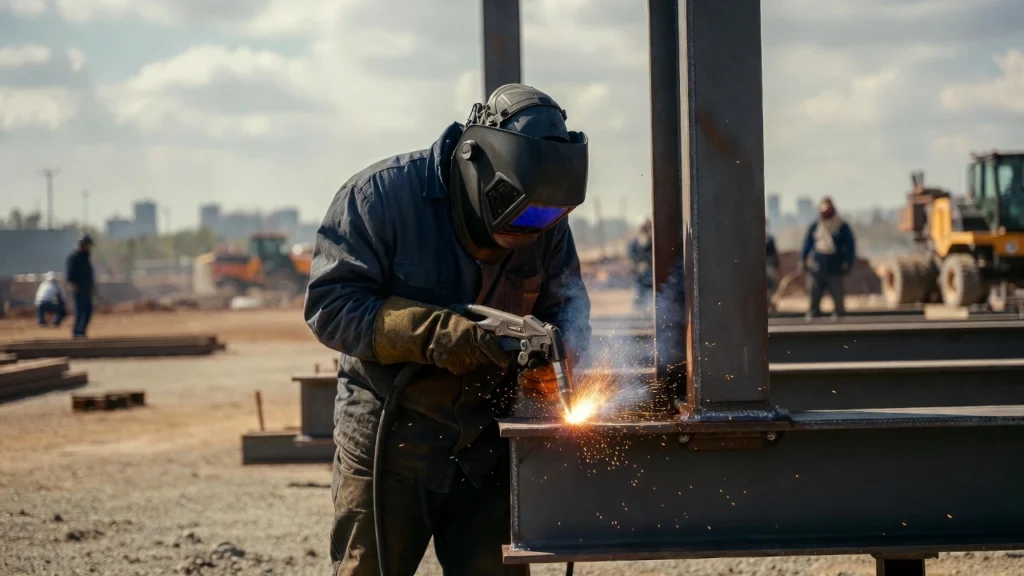
Shop welding happens in a controlled environment. On-site welding does not. When a welder sets up on an active Toronto construction site, they are working around moving equipment, open floors, overhead loads, and crews from other trades who may not know a welding arc is live nearby.
The risks are real. Arc flash injuries, fires from welding spatter, fume inhalation, and falls from elevated positions account for a significant share of welding-related incidents on construction sites. Most are preventable with proper planning and trained execution.
That is the standard our team operates to on every project across the GTA. Here is what that looks like in practice.
1. Pre-Work Site Assessment Is Not Optional
Before any arc is struck, our welders walk the work zone. This is a non-negotiable step, not a formality. The assessment covers proximity to flammable materials, ventilation availability, access to fire suppression, the condition of surrounding structure, and whether other trades will be active in the same zone during the weld.
FIELD STANDARD: If site conditions do not meet our safety criteria, we stop and communicate with the site supervisor before proceeding. No project timeline justifies skipping this step.
For work in confined spaces — such as inside shipping containers or enclosed steel frames — the pre-assessment also includes atmospheric testing for oxygen levels and flammable gas. This is a requirement under Ontario's Occupational Health and Safety Act, and we treat it as baseline on every applicable job.
2. Hot Work Permits and Site Communication
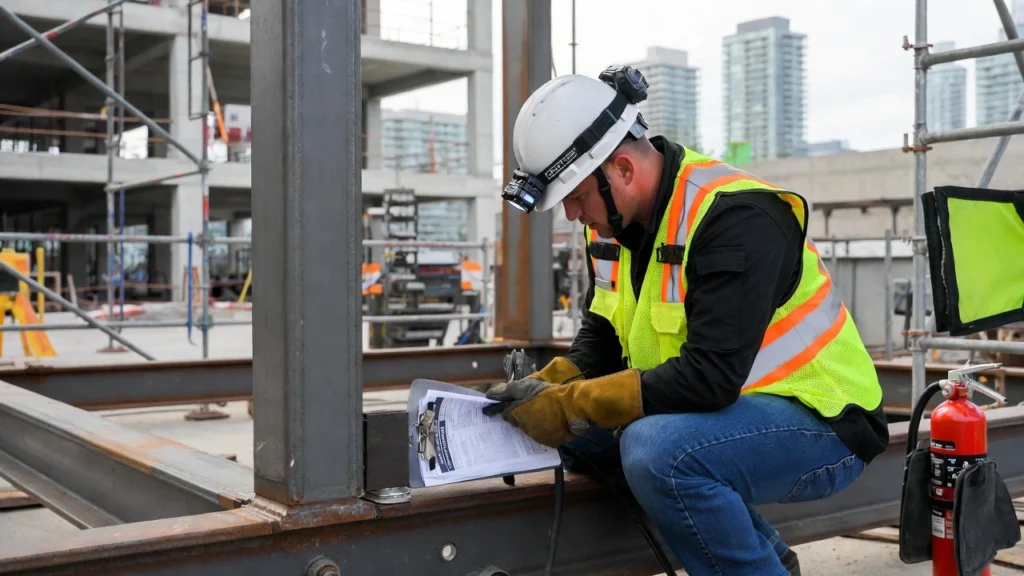
Welding is classified as hot work. On commercial and industrial construction sites in the GTA, this typically requires a hot work permit issued by the site supervisor or general contractor. The permit documents what is being done, where, and what controls are in place before work starts.
Some smaller residential sites operate without a formal permit process, but that does not mean communication can be skipped. Before we start, the site supervisor and any nearby trades need to know that welding is happening, where, and for how long.
- Hot work permit obtained and posted at the work zone
- Nearby trades informed and clear of the arc zone
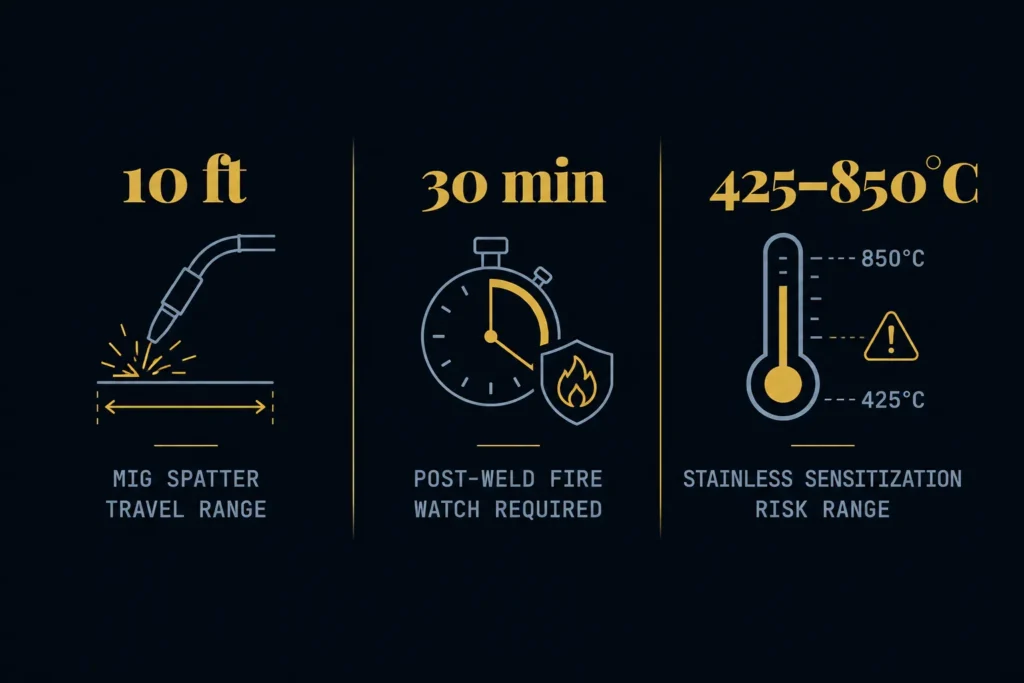
- Fire watch assigned for the duration of work and 30 minutes after
- Welding screens or flash guards in place to protect other workers
- Emergency exit paths confirmed and kept clear
3. Personal Protective Equipment: No Shortcuts
PPE for on-site welding covers more than a welding helmet. The environment dictates what is required, and on a construction site, that list is longer than in a controlled shop setting.
| Category | Requirement |
|---|---|
| Head & Eyes | Auto-darkening helmet with the correct shade for the process. Hard hat worn where overhead hazards exist. |
| Hands & Arms | Welding gloves are rated for the heat output of the process. Leather sleeves for overhead work where spatter is a factor. |
| Footwear | Steel-toed, leather boots. Welding spatter on synthetic materials is a burn and fire hazard that leather prevents. |
| Respiratory | In enclosed or low-ventilation areas, a fume-rated respirator is mandatory. Open outdoor sites may not always require it, but the material and process dictate the call. |
For elevated structural work, fall protection is added to the above list. On sites where steel is being welded at height, our team works with a proper harness and anchor system coordinated with the site's fall protection plan.
4. Fire Prevention Around Active Framing and Structure
Welding spatter travels further than most people expect. On a framed residential build with exposed wood structure, a single spark in the wrong place can start a smoldering fire that does not show itself for hours. We have seen it happen on sites where the welding itself was done correctly but the surrounding structure was not properly protected.
FIELD STANDARD: Spatter from a MIG weld can travel up to 10 feet. Any combustible material within that radius needs to be removed or shielded before work begins. This includes lumber, insulation, vapour barriers, and temporary site materials.
Our standard on wood-framed builds: welding blankets and fire-resistant barriers protect nearby structures, and a charged fire extinguisher stays within arm's reach before any arc is struck. Fire watch continues after the weld is complete, not just during it. Hot material and hidden embers do not follow a schedule.
5. Fume Control on Active Sites
Welding fumes are a health hazard that gets underestimated on outdoor sites. The assumption is that open air means adequate ventilation. In practice, that depends on wind direction, proximity to surrounding structures, and how much welding activity is happening at once.
Galvanized steel and coated metals present an added risk. Welding galvanized material without respiratory protection can cause metal fume fever, a condition that mimics flu symptoms and can sideline a welder for days.
How do we manage fume exposure?
We position welders so that the fume plume moves away from the breathing zone. On enclosed or partially enclosed sites, portable fume extraction is used. When working with coated or galvanized materials, half-face respirators with the correct filter cartridge are required regardless of outdoor setting. The material dictates the protection level, not the location.
6. Equipment Inspection Before Every Use
Construction sites are hard on equipment. Cables get kinked, connectors corrode, and ground clamps loosen in transit. A welding machine that was working fine on the last job may have developed an issue during transport or setup on the current site.
Our welders run a pre-use inspection every time. This covers the machine, cables, torch or electrode holder, and ground connection. A poor ground connection is one of the most common causes of arc instability and weld defects on site. It is also a shock hazard if left unaddressed.
- Cables inspected for cuts, abrasion, or insulation damage
- Ground clamp connection confirmed clean and secure
- Machine power supply verified and protected from moisture
- Torch or electrode holder free of cracks or damage
- Shielding gas lines checked for leaks (MIG and TIG processes)
7. Coordinating with Other Trades on Site
On a busy GTA construction site, a welder does not work in isolation. Framers, electricians, mechanical crews, and concrete trades may all be active on the same day, in overlapping zones. Safety on a shared site is a shared responsibility.
We communicate the arc zone clearly before starting and use flash screens to prevent accidental exposure. No one without appropriate eye protection should have a direct line of sight to an active weld. Flash burns to unprotected eyes are a serious injury that can affect vision for days.
ON EVERY JOB: We brief the site supervisor on our work zone before we start. If another trade needs to move through the area during our work, we pause, clear the zone, and restart. A two-minute delay prevents an injury that shuts a site down for far longer.
What Separates a Safe Operation from a Risky One
The difference between a safe on-site welding crew and an unsafe one is rarely equipment. Both may have comparable machines and PPE. The difference is culture and process: whether safety steps are built into the workflow or treated as a box to check before moving on.
At CanaWelding, our team operates as a division of CanaStruct Inc., which has built its reputation on structural work across residential, commercial, and industrial projects throughout the GTA. When you bring structural steel and on-site welding together on a live build, the margin for error is narrow. That reality is built into how we train and how we work.
Every welder on our crew is accountable not just for the quality of the weld, but for the conditions surrounding it. That is what it means to run a professional on-site welding operation.
Frequently Asked Questions
What are the 10 safety rules when welding?
The core rules are: wear full PPE (helmet, gloves, leather sleeves, steel-toed boots), work in a ventilated area or use fume extraction, clear flammable material from the work zone, inspect equipment and cables before every use, confirm proper grounding, keep a charged fire extinguisher within reach, assign a fire watch, avoid welding in wet conditions, never weld in an untested confined space, and follow your site's hot work permit. On an active construction site, add a pre-work site assessment and clear communication with other trades before striking an arc.
Do you need a hot work permit to weld on a Toronto construction site?
On most commercial and industrial GTA sites, yes. The general contractor or site supervisor issues a hot work permit before welding starts, documenting the work location, the controls in place, and the fire watch requirements. Some smaller residential sites skip the formal permit, but nearby trades and the site supervisor still need to know welding is happening.
How long does a fire watch need to stay after welding stops?
Our crews keep a fire watch in place for at least 30 minutes after the weld is finished, since hot spatter and embers can smoulder before a fire shows itself. Depending on the material and site conditions, some hot work permits call for a longer watch, so always follow the duration listed on your permit.
What PPE does on-site structural welding require?
At minimum: an auto-darkening helmet with the correct shade, welding gloves rated for the process, leather sleeves for overhead work, and steel-toed leather boots, plus a hard hat where overhead hazards exist. Enclosed or low-ventilation areas add a fume-rated respirator, and elevated structural work adds a harness and anchor system tied into the site's fall protection plan.
Do you need a respirator when welding outdoors?
It depends on the material, not just the location. Open outdoor sites don't always require one, but welding galvanized or coated steel releases zinc oxide fumes that cause metal fume fever regardless of ventilation. We require a half-face respirator with the correct filter cartridge whenever coated or galvanized material is being welded, outdoors or not.
Is atmospheric testing required before welding in a confined space?
Yes. Under Ontario's Occupational Health and Safety Act, confined spaces such as shipping containers or enclosed steel frames need atmospheric testing for oxygen levels and flammable gas before welding starts. We treat this as a baseline step on every applicable job, not an optional precaution.
Need On-Site Welding for Your GTA Project?
Licensed | Safety-Compliant | On-Site Today
Our team delivers CWB-certified, safety-compliant on-site welding across Toronto, Mississauga, Brampton, Vaughan, Markham, Scarborough, Etobicoke, and the wider GTA.
