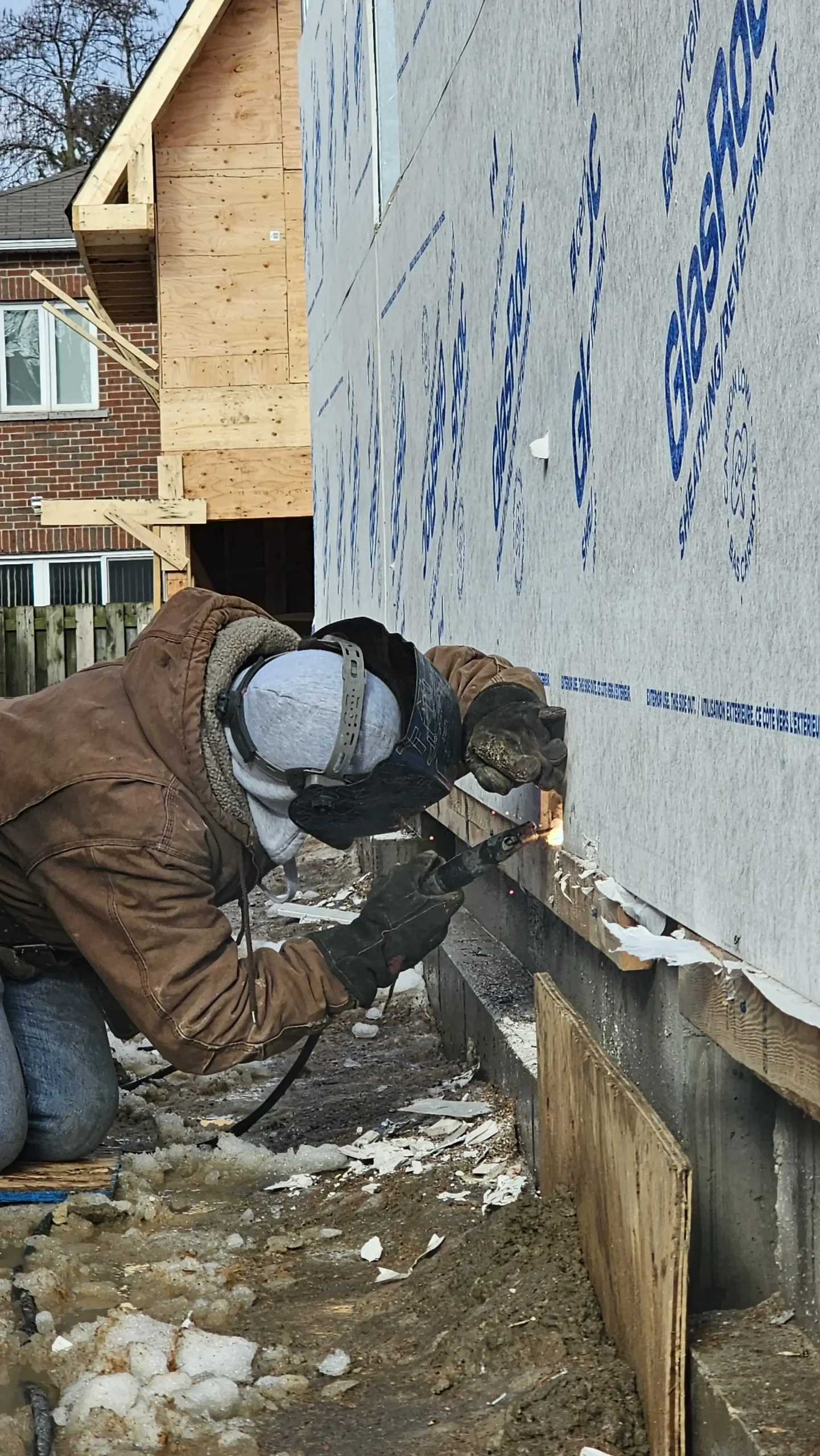
On-Site Welding
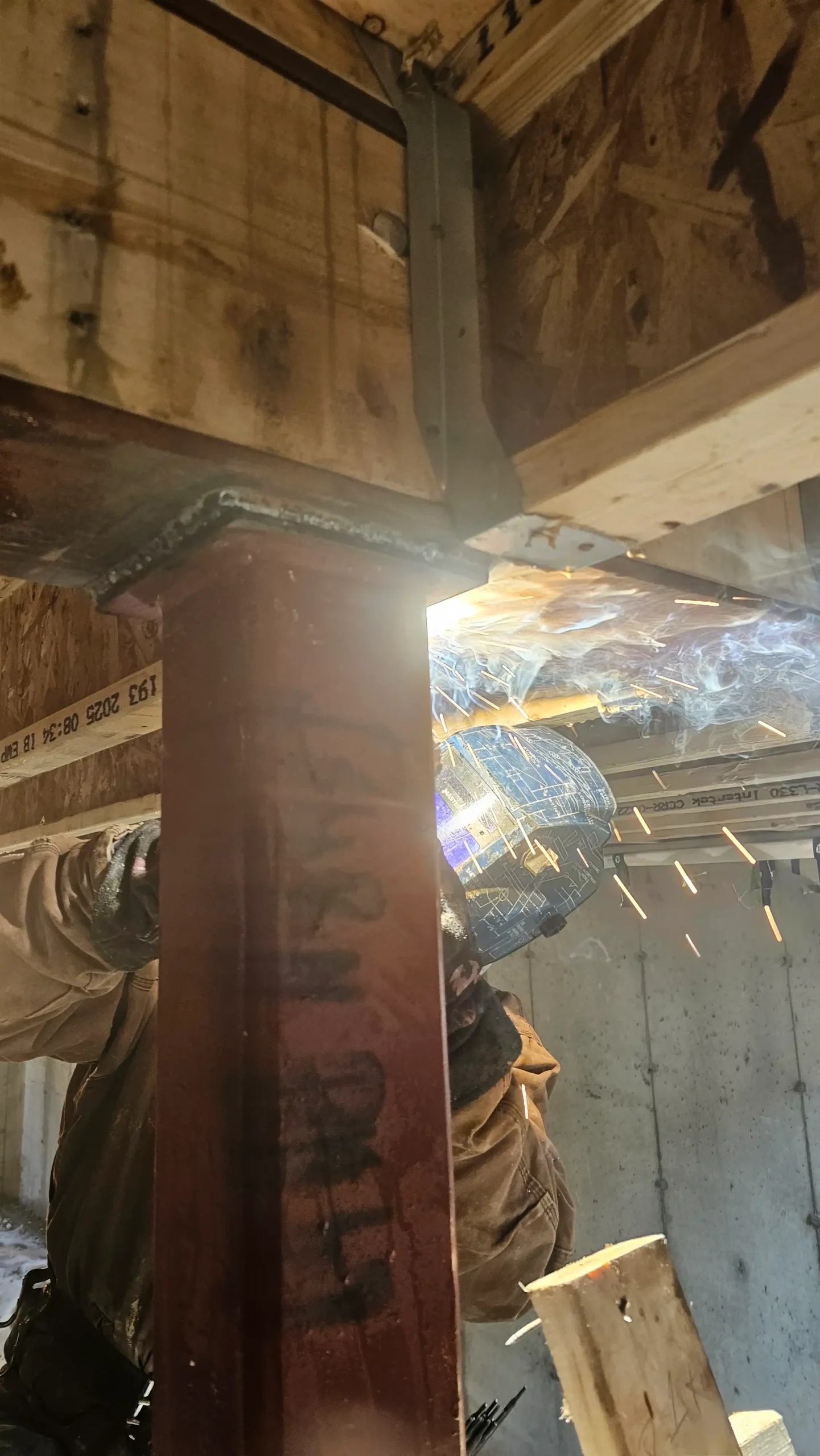
Mobile welding dispatched to your job site across the GTA, no shop drop-off required.
weld@canawelding.ca
CWB-Certified · Greater Toronto Area
CanaWelding provides CWB-certified stainless steel welding on-site across Toronto and the GTA, using TIG and tri-mix MIG with grade-matched ER308L, ER316L, and ER309L filler wire. We weld 304, 316L, and duplex stainless for railings, food-grade equipment, and structural work, with same-day dispatch and no shop drop-off.
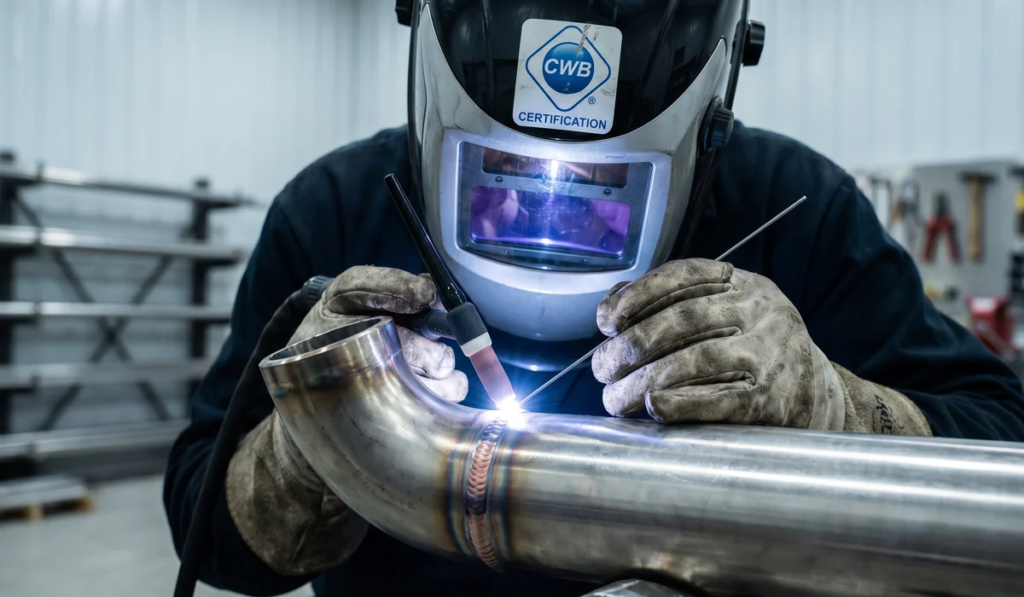
Stainless steel welding is the joining of chromium-alloyed steel using a process and filler material matched to the specific grade, so the finished weld keeps the base metal's corrosion resistance instead of losing it to heat damage. Get that match wrong and the joint rusts from the weld line outward within a season, even though the surrounding metal doesn't.
CanaWelding is a CWB-certified stainless steel welding contractor serving Toronto, Mississauga, Brampton, Vaughan, Markham, and the broader GTA, on-site. We work in 304, 316L, and duplex stainless using TIG (GTAW) and tri-mix MIG (GMAW), with the correct grade-matched filler carried on every truck, not sourced after the fact.
As the welding division of CanaStruct Inc., an HCRA-licensed structural framing contractor, CanaWelding brings a structural pedigree to work that many mobile welders treat as a generic metal-joining job. On stainless specifically, that shows up in how heat input and dilution are controlled, not just in the certification on file.
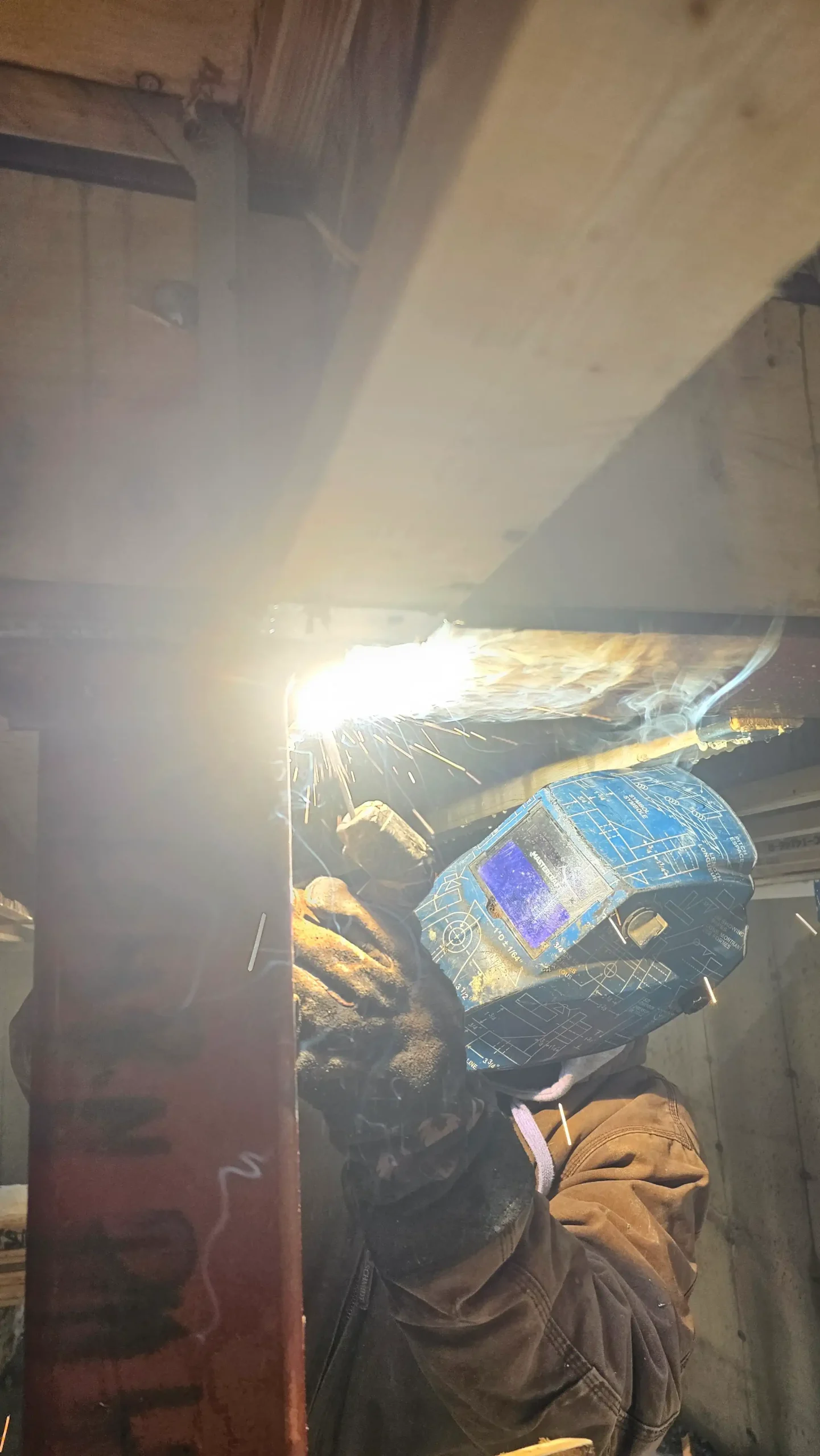
Every stainless job gets matched to the right grade, process, and filler before the arc strikes, whether it's a residential railing or a food-grade processing line.
304 railing and balustrade repair and fabrication, cable railing hardware repair, architectural stainless features, and outdoor stainless furniture repair. Most residential stainless work uses grade 304, TIG welded for a clean, cosmetically finished bead that doesn't need grinding to look right.
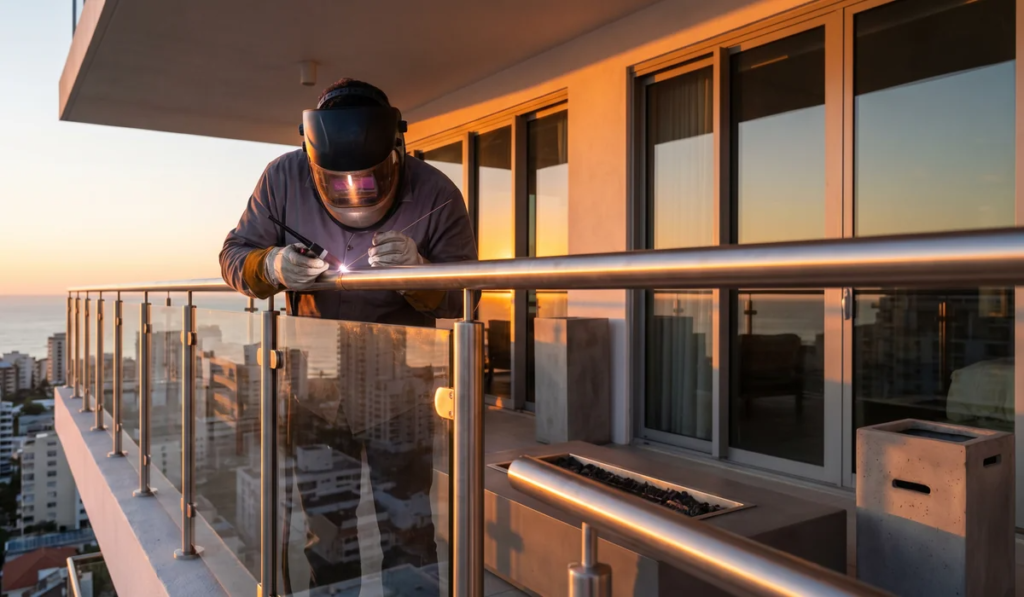
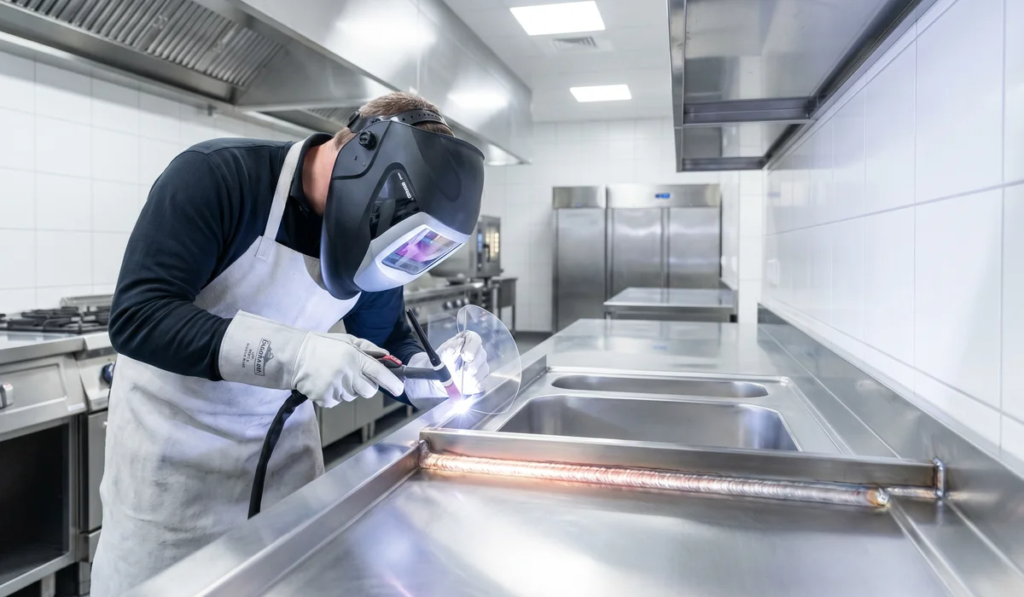
316L stainless TIG welding with post-weld passivation for commercial kitchens, food processing facilities, breweries, and pharmaceutical environments. These jobs carry the tightest tolerance for contamination and corrosion, so grade, filler, and finish all get treated as non-negotiable.
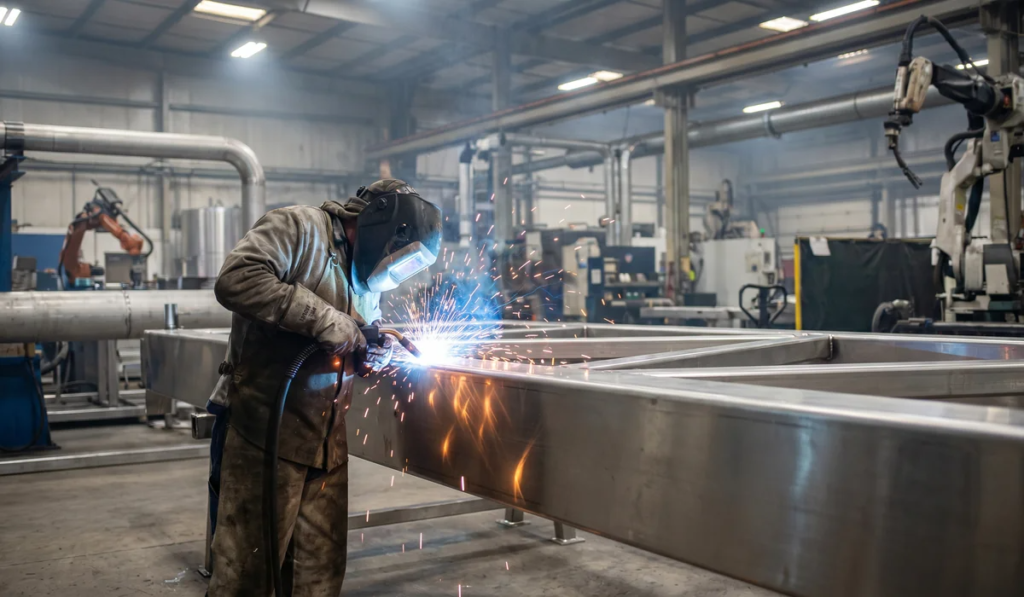
Structural stainless welding with full compliance documentation for stainless pipe supports, equipment frames, structural connections, food processing conveyors, and plant maintenance stainless repair. CWB certification and HSE documentation are available on request for any job that needs a paper trail.
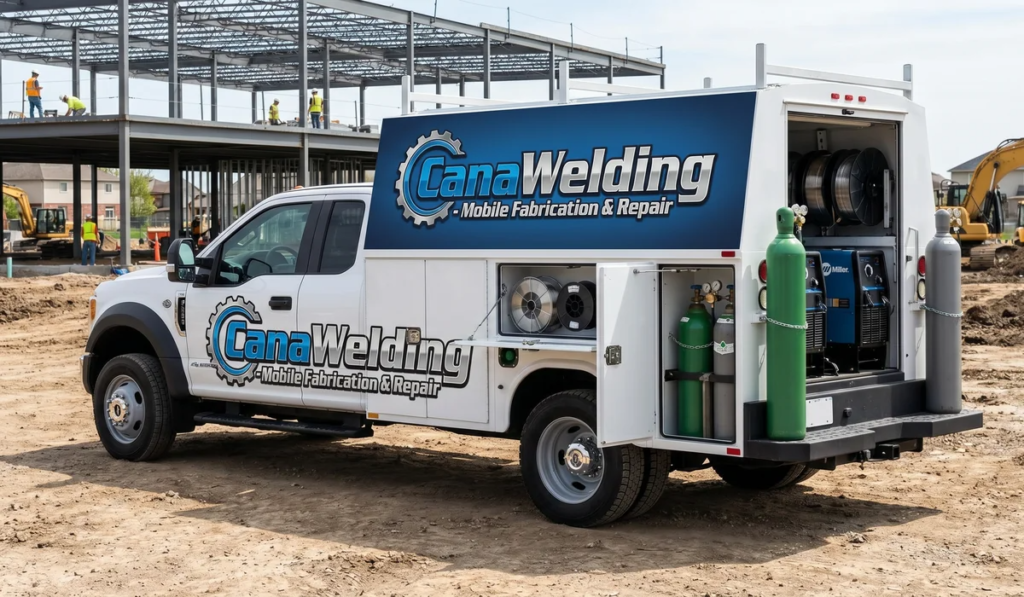
Stainless work fails most often because a truck shows up with the wrong filler or the wrong shielding gas on board, and someone improvises. CanaWelding trucks carry grade-matched consumables for every stainless job on the schedule, so the correct process starts on the first pass, not the second visit.
Grade determines both the filler and the environment a weld can survive in. Using 304 filler on a 316L application, or the reverse, is one of the most common stainless mistakes we're called out to fix.
| Grade | Composition | Filler | Best For | Avoid In |
|---|---|---|---|---|
| Grade 304 | 18% chromium, 8% nickel | ER308L | Railings, structural, architectural, general fabrication | Chloride-heavy environments: salt spray, pool chemicals, de-icing salts |
| Grade 316L | 304 base plus molybdenum | ER316L | Food-grade, pharmaceutical, marine, chemical processing | Budget-sensitive jobs with no corrosion exposure (costs more to buy and weld) |
| Duplex (2205) | Austenitic-ferritic mix | ER2209 | Marine, oil and gas, chemical processing, high-strength needs | Simple cosmetic or low-load residential work |
2205 is the most common duplex grade. It combines austenitic and ferritic microstructure for superior strength and chloride resistance, common in marine, oil and gas, and chemical processing applications, and welds with ER2209 filler.
In most cases, the material grade is marked or identifiable from fabrication stamps, mill certificates, or purchase records. When documentation isn't available, a portable XRF analyzer identifies the alloy composition on-site before any filler is chosen.
One visit. One team. No shop drop-off and no back-and-forth over grade or filler.
We confirm the stainless grade on-site from mill certs, stamps, or an XRF reading, and check the environment the weld needs to survive.
A transparent, itemized quote based on the confirmed grade, process, and scope. What we quote is what you pay, no surprise line items after the fact.
TIG or tri-mix MIG with grade-matched filler, controlled heat input, and post-weld cleanup or passivation, completed in one visit.
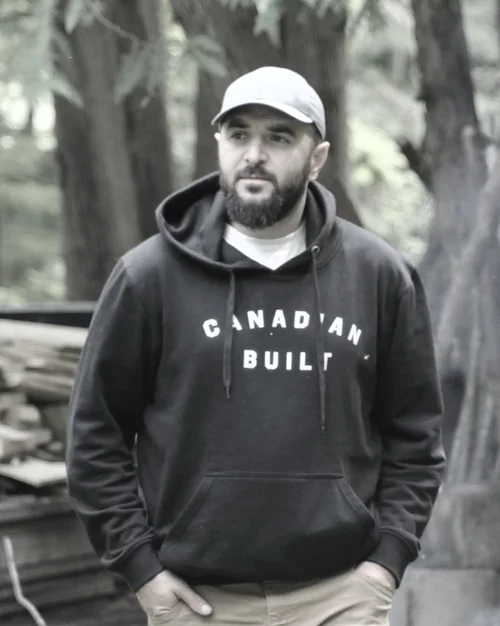
Who Stands Behind This Work
Structural Framer & Co-Owner, CanaStruct Inc. · HCRA-Registered Ontario Contractor
CanaWelding operates as the welding division of CanaStruct Inc., and every job traces back to Zura Mirzikashvili's 15+ years of structural framing and building experience in the GTA. That background matters on stainless work specifically because heat control and distortion behave differently on thin architectural stainless than on structural carbon steel, and both require judgment beyond just running a bead.
CWB-certified welders are engaged per project, CanaStruct Inc. carries full WSIB compliance and liability insurance, and every stainless job follows the same accountability chain as CanaWelding's structural work. Read more about Zura Mirzikashvili's background →
Not a self-declared certification. It is the regulated standard engineers specify on structural drawings.
On-site stainless welding across the full GTA. No shop required, no return trips because a machine was missing.
What we quote is what you pay. One price, one invoice, no surprises after the arc is struck.
ER308L, ER316L, and ER309L stocked on every visit. We never substitute carbon steel wire or the wrong shielding gas.
Full commercial general liability insurance and active WSIB clearance on every job site.
Division of CanaStruct Inc., an HCRA-licensed structural framing contractor, not a standalone welding shop.
Mobile welding dispatched to your job site across the GTA, no shop drop-off required.
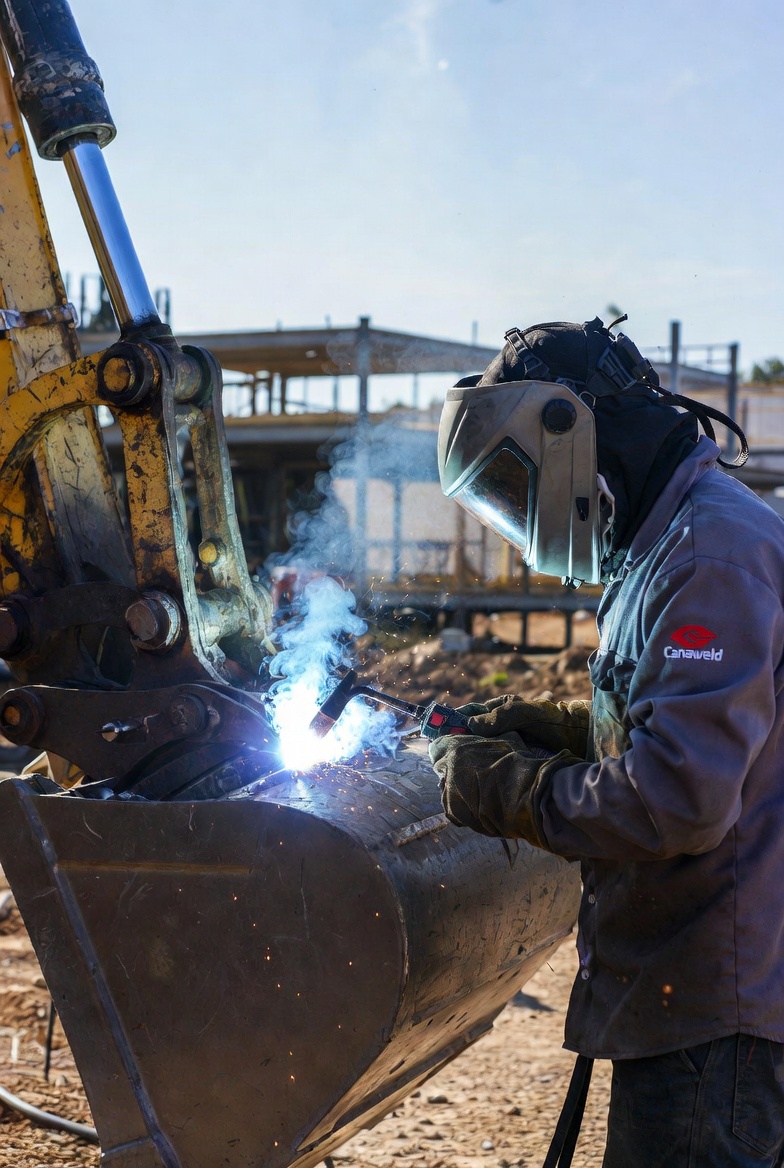
CWB-certified structural welding for beams, columns, and connections, tied to CanaStruct's framing background.
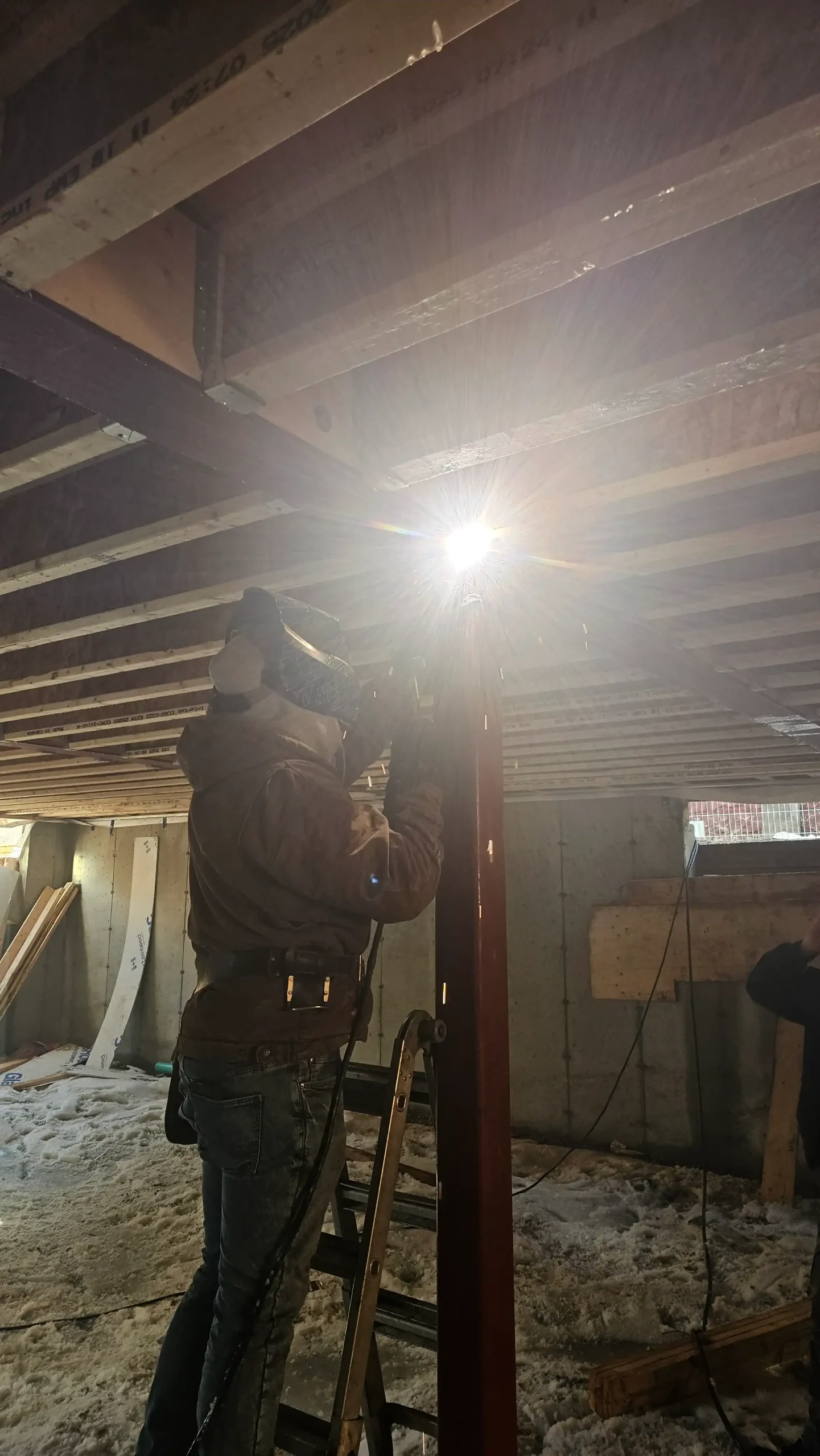
One-off and small-run metal fabrication built to spec, on-site or shop-assisted.
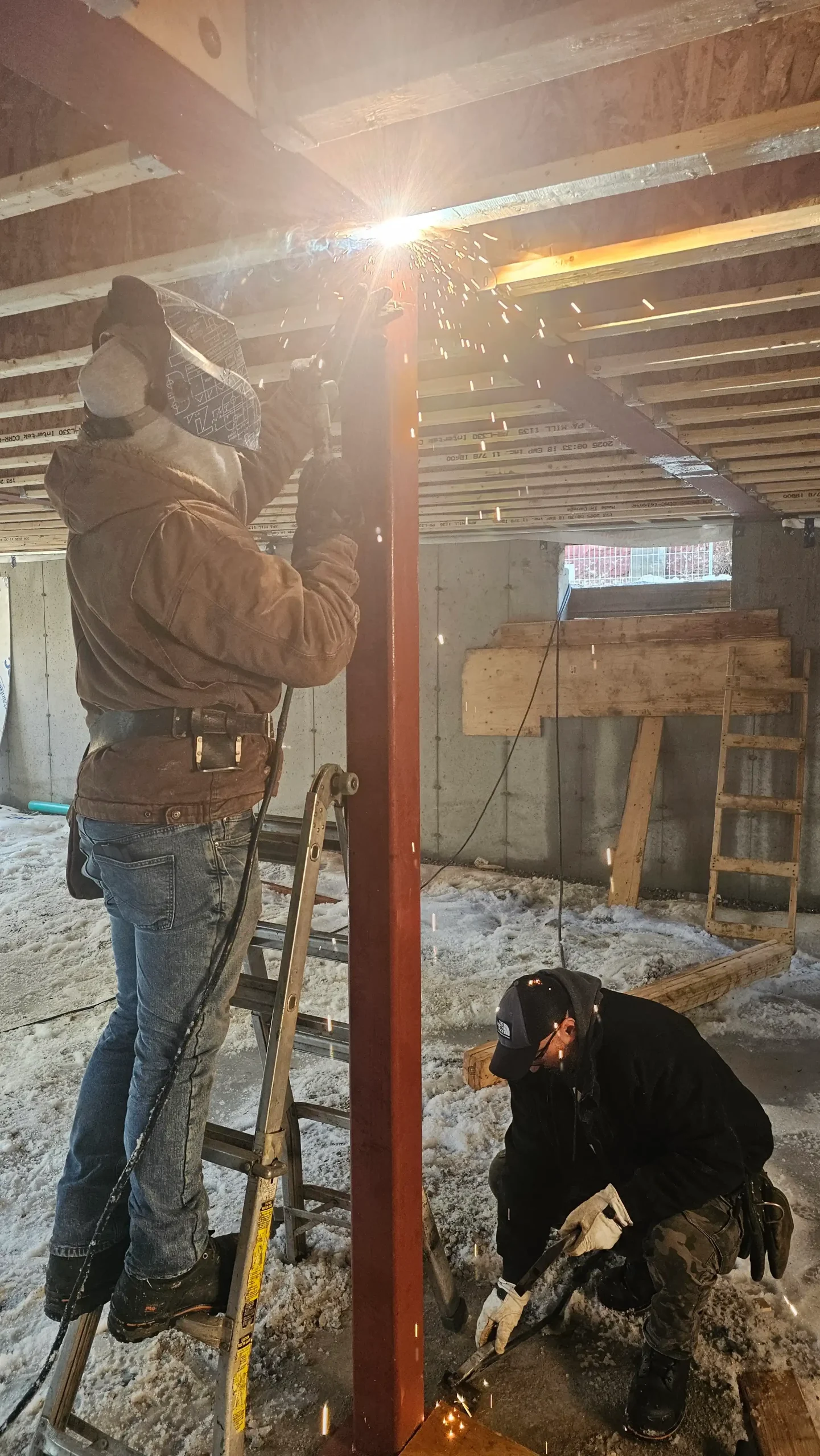
Container modifications, reinforcement, and repair for storage and conversion projects.
Fast dispatch for welding failures that can't wait for a scheduled visit.
Frame, bucket, and attachment welding for construction and industrial equipment.
Crack repair, reinforcement, and failed-weld correction across steel, aluminum, and stainless.
Iron, steel, and aluminum railing repair and new installation for residential and commercial properties.
Frame, hitch, and structural repair for trailers taken out of service by a failed weld.
CanaWelding dispatches CWB-certified stainless welders on-site across the Greater Toronto Area, from Toronto and Etobicoke through Mississauga, Brampton, and Markham, with same-day service on most calls. If your address is within the GTA and isn't listed below, call or email to confirm coverage.
TIG (GTAW) is the preferred process for precision, food-grade, and cosmetically visible stainless applications. MIG (GMAW) with tri-mix shielding gas is used for faster structural and production stainless work. Both require matching filler to the base alloy grade, controlling heat input to prevent sensitization, and argon back-purging for piping work.
Sensitization occurs when stainless steel is heated to the 425–850°C range for too long during welding. Chromium in the alloy combines with carbon to form chromium carbides at grain boundaries, depleting the chromium in the adjacent metal and leaving that zone vulnerable to corrosion.
For stainless TIG welding, 100% pure argon is standard. For stainless MIG welding, tri-mix gas (typically argon/helium/CO₂ or argon/CO₂/N₂) is used. The wrong gas mix affects both weld quality and corrosion resistance at the joint.
Yes. More so than carbon steel. Hexavalent chromium (Cr VI) is generated when welding stainless steel and is classified as a human carcinogen. Proper ventilation and fume extraction are standard on every stainless job we run.
Wire brush with a stainless-dedicated brush only. Carbon steel wire brushes cause iron contamination that produces rust spots on the stainless surface. Heat tint is removed with pickling paste or electrochemical cleaning, then the surface is passivated with a citric or nitric acid solution.
Yes. Using ER309L filler rod, which is designed specifically for dissimilar stainless-to-carbon steel joints. The resulting weld dilutes properties between both materials, so it's specified deliberately rather than substituted in as a default.
As a general guide, residential stainless repairs run $250–$600, and commercial food-grade or architectural stainless work runs $450–$1,200 and up, depending on grade, access, and scope. What we quote is what you pay, confirmed on-site before work starts.
Yes. On-site stainless steel welding across Toronto and the entire GTA, with same-day dispatch on most calls. No shop drop-off required for the large majority of residential and commercial stainless jobs.
In most cases, the material grade is marked or identifiable from fabrication stamps, mill certificates, or purchase records. When documentation is unavailable, a portable XRF analyzer identifies the alloy composition on-site before any filler is selected.
Coverage runs across the Greater Toronto Area, including Toronto, Etobicoke, Scarborough, North York, Mississauga, Brampton, Oakville, Burlington, Vaughan, Richmond Hill, Newmarket, Markham, Ajax/Pickering, and Oshawa.
Tell us the grade, the environment, and the scope. We'll confirm the process, the filler, and a transparent quote before anyone shows up on-site.